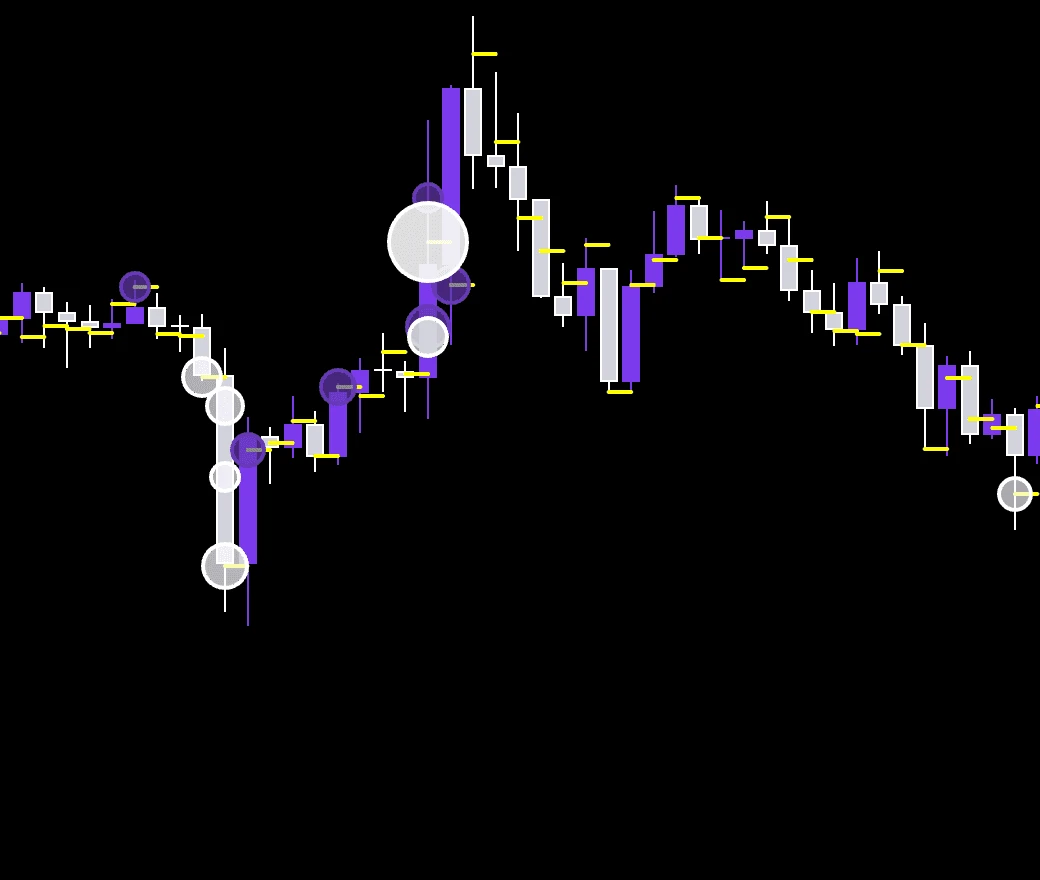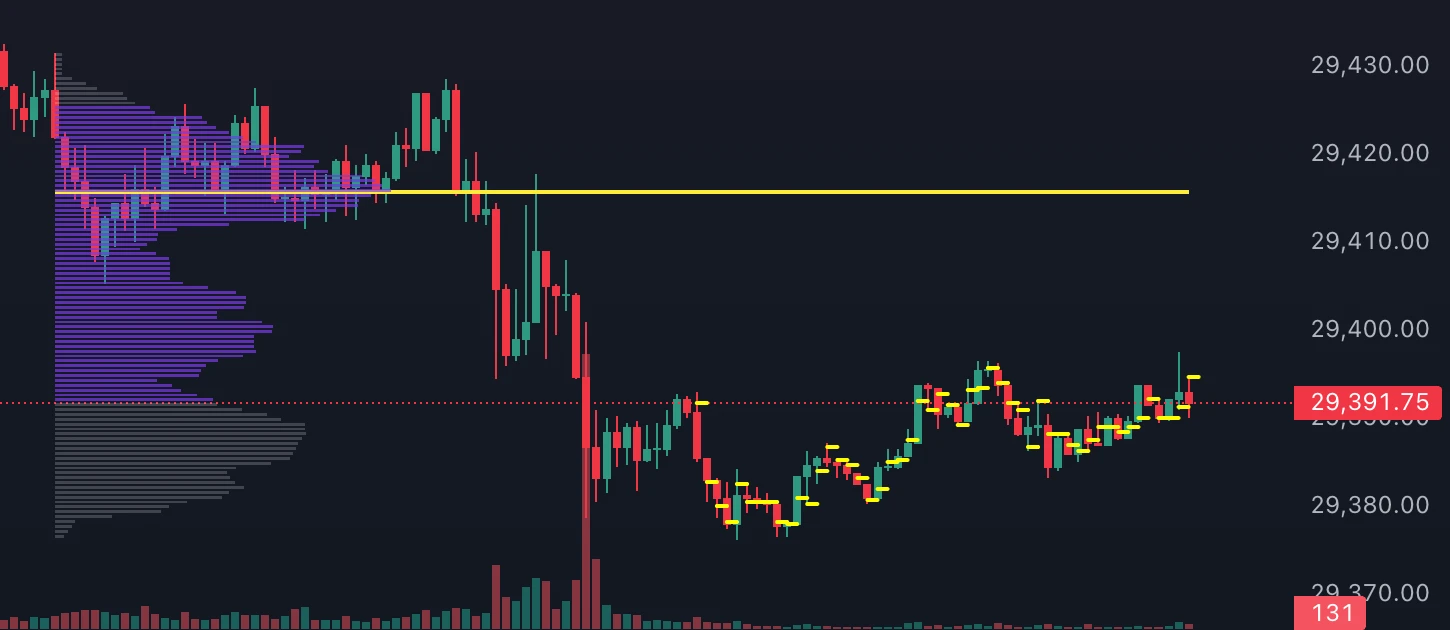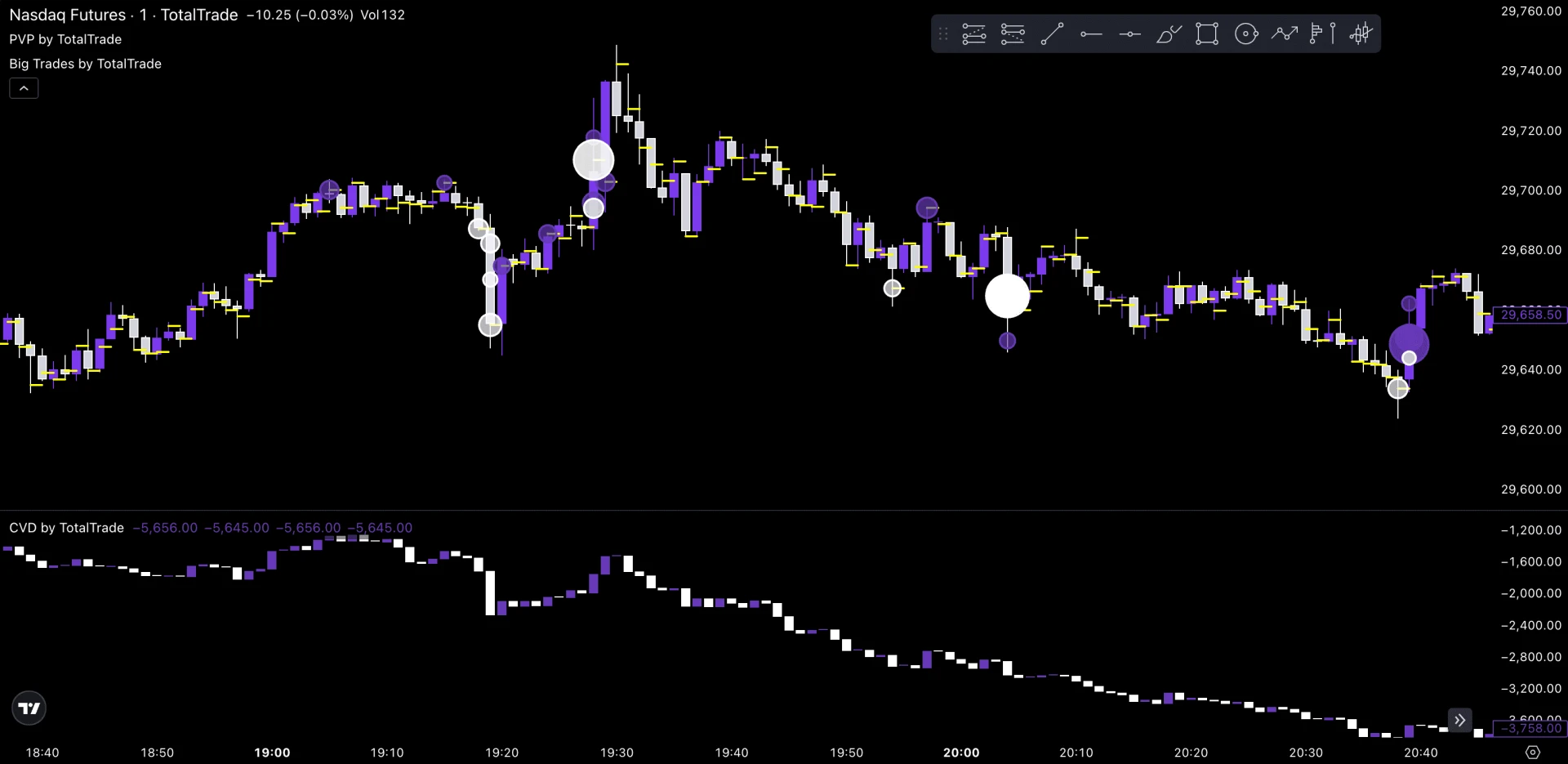
Cumulative Volume Delta (CVD) adds up each interval's delta over time, meaning the difference between aggressive buying volume and aggressive selling volume. It shows how aggressive pressure builds and, more importantly, whether price is following it. A rally with rising CVD and a flat price while CVD keeps climbing tell two different stories.
How CVD is calculated
In bid/ask delta, volume traded at the ask counts as aggressive buying and volume at the bid as aggressive selling. The difference is the interval's delta; CVD accumulates it.
| Candle | At ask | At bid | Delta | CVD |
|---|---|---|---|---|
| 1 | 250 | 170 | +80 | +80 |
| 2 | 200 | 230 | −30 | +50 |
| 3 | 260 | 160 | +100 | +150 |
Rising CVD means positive delta is accumulating over the stretch you're watching; falling CVD means negative delta. The calculation describes the aggressiveness of executions, not how many people are bullish or bearish. Every contract always has a buyer and a seller.
Level vs. slope: why a negative CVD can rise
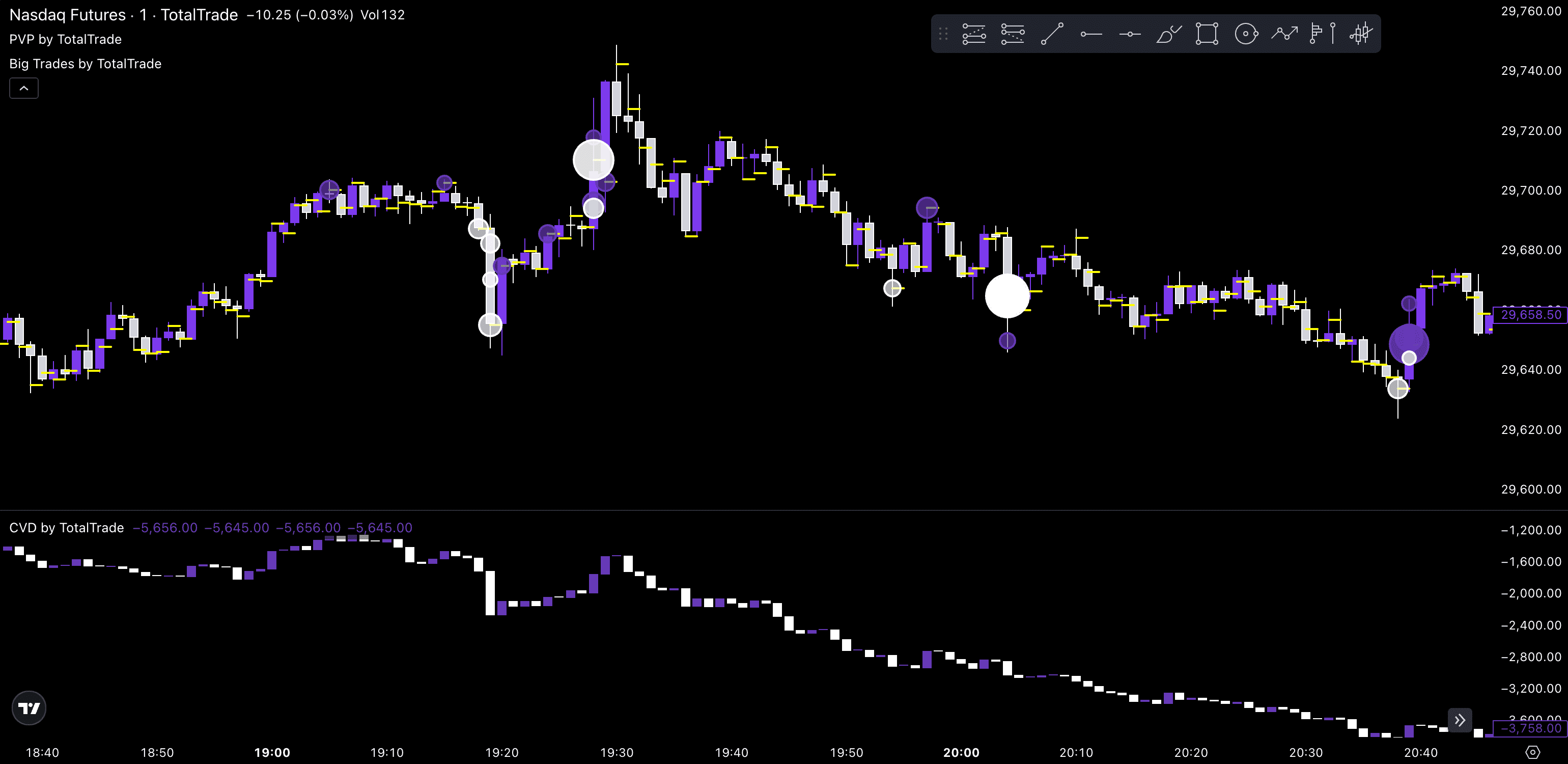
CVD carries all the delta accumulated since the count started. If it goes from −2,000 to −800, it added +1,200 of delta over that stretch while staying below zero.
- The sign tells you the balance since the count began.
- The slope tells you what's happening now.
The reset matters too. A CVD that resets each session and one that includes previous days start from different references, so their absolute values aren't comparable.
Divergence vs. absorption: two different setups
| Setup | Price | CVD | What it suggests |
|---|---|---|---|
| Bearish divergence | New high | Below its previous high | The new price extreme isn't backed by new aggressive buying |
| Absorption | Fails to clear resistance | New high | Aggressive buying continues but passive sellers are absorbing it |
Keep them apart: in the first, price rises without delta confirming it; in the second, delta rises without price confirming it. For the underlying order flow concepts, see our guide to order flow trading.
To compare price and CVD correctly, use the same points on the chart. If price makes two highs, check where CVD stood at exactly those two highs. Comparing different points creates divergences that don't exist.
Neither setup fixes the timing of a reversal. What matters is where it forms (at a meaningful level or mid-range) and what happens next: a break in structure, a return below the level, another attempt.
The calculation depends on the data
Not every indicator called CVD uses the same information:
- some are based on executions classified at bid or ask;
- others estimate delta by assigning a sign to the volume of smaller bars based on price movement.
In the second case you're looking at an estimate of pressure, not a classification of trades. Data feed, session start and volume filters also change the result. If two CVDs disagree, check their inputs before reading them as opposing views of the market.
Futures volume (contracts traded) differs from forex tick volume (price updates). Keep that distinction in mind when you switch markets.
Using CVD in the TotalTrade Backtester
CVD By TotalTrade is available for futures in the indicator catalog on the Ultra plan. In the Backtester you place it alongside the chart and follow it during replay:
- start from a zone you already use, such as a prior high;
- watch CVD during the breakout attempt and the pullback that follows;
- if CVD feeds into your decision, note which behavior you considered relevant;
- during review, check whether it helped, whether you acted too early, or whether price simply did something else.
The comparison is easier to read on one specific move than on every wiggle of the indicator.
FAQ
Is CVD an entry signal?
No. It describes aggressive pressure and how it relates to price. Entries and management remain part of your method.
Should I use a session CVD or a continuous one?
It depends on your analysis. For intraday trading, a CVD that resets each session makes the day's values comparable; to follow multi-day trends you need a continuous count.
Can I use CVD on forex?
Spot forex volume is usually tick volume, so any CVD is an estimate rather than a bid/ask classification of trades. That's why TotalTrade's CVD is built for futures.
For information and education only, not financial advice. Leveraged trading carries a high risk of loss.