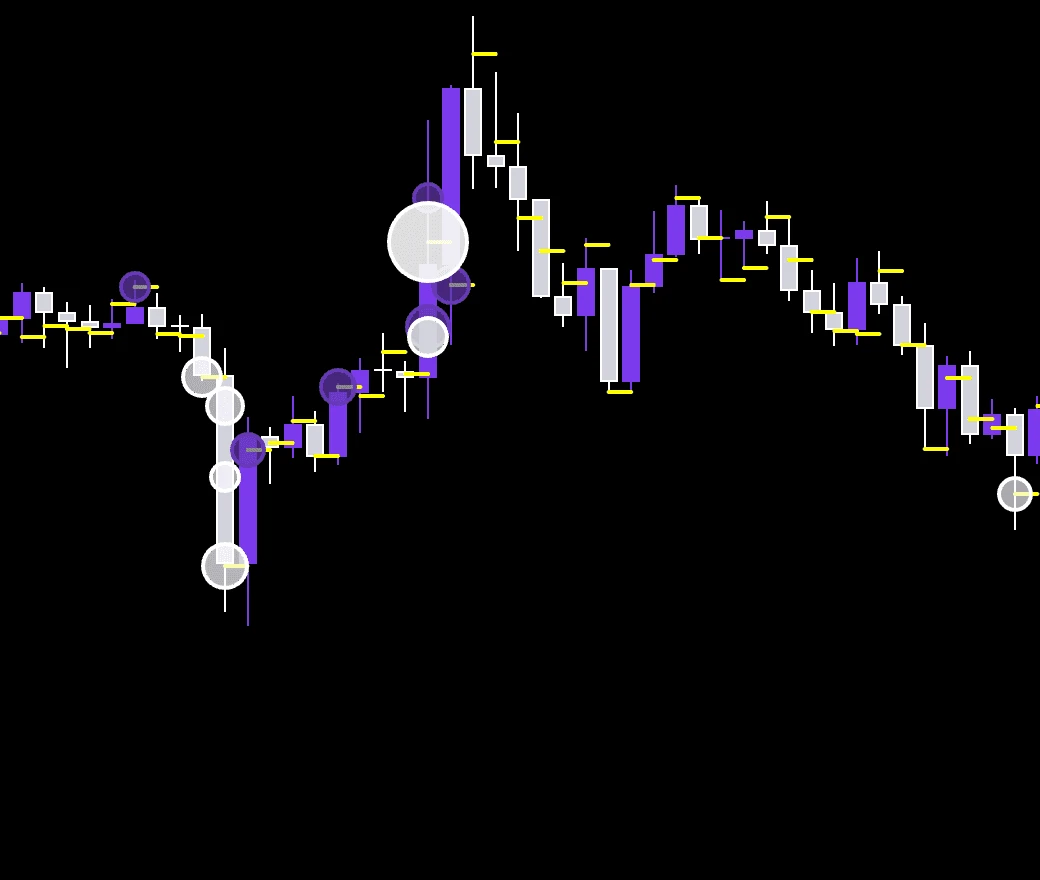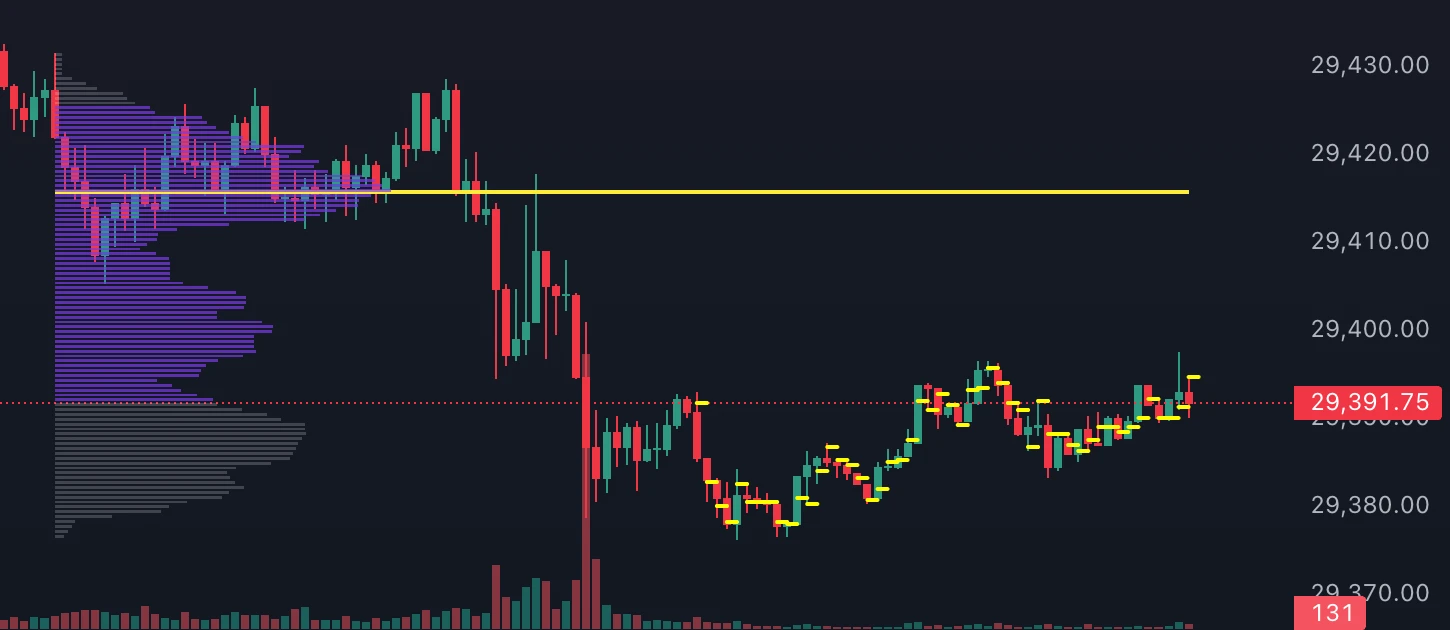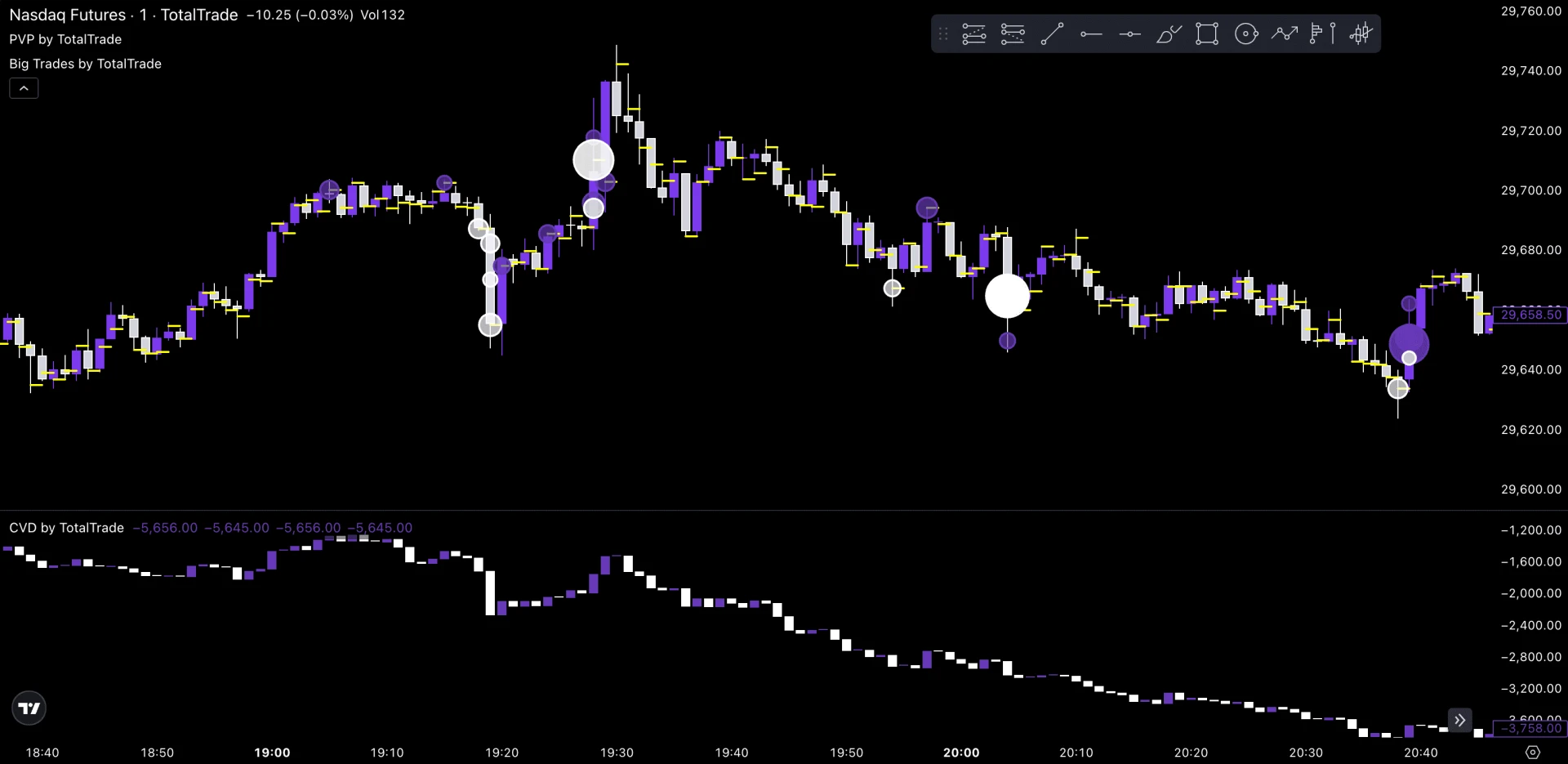
Order flow analysis looks at trades and how they're executed: not just where price goes, but who is taking liquidity and how the market responds. It's most useful near the levels where you're considering a trade. Aggressive buying that drives a breakout and aggressive buying that can't move price describe opposite situations, even with similar volume.
Aggressive orders and passive liquidity
In a market with an order book, buy orders sit on the bid and sell orders on the ask. The gap between the best bid and best ask is the spread.
- An aggressive buyer executes at the ask, against sell orders already resting there.
- An aggressive seller executes at the bid, against resting buy orders.
- A limit order that rests in the book provides passive liquidity.
What matters is how an order interacts with the book, not its name: a limit order can also fill immediately if its price reaches the other side.
Price rises when buying consumes the available offers and fills at higher prices. How much aggression that takes depends on the liquidity it meets; order modifications and cancellations also change book depth.
Volume and delta measure different things
Every contract traded has a buyer and a seller. Volume therefore never shows "more buyers than sellers".
Delta, on the other hand, measures who took the initiative:
| Contracts | |
|---|---|
| Traded at the ask (aggressive buys) | 700 |
| Traded at the bid (aggressive sells) | 300 |
| Volume | 1,000 |
| Delta | +400 |
A positive delta can still appear while price barely moves: buyers are executing, but passive sellers keep absorbing them. Aggression and price movement have no fixed relationship. A lot of contracts can be absorbed near a level, while in a thin book a small amount can move price a long way.
Three tools, three views of the same trades
| Tool | What it shows | Guide |
|---|---|---|
| Volume Profile | Volume distributed by price | Volume Profile, POC and Value Area |
| CVD | Delta accumulated over time | Cumulative Volume Delta |
| Big Trades | Large individual trades | Big Trades |
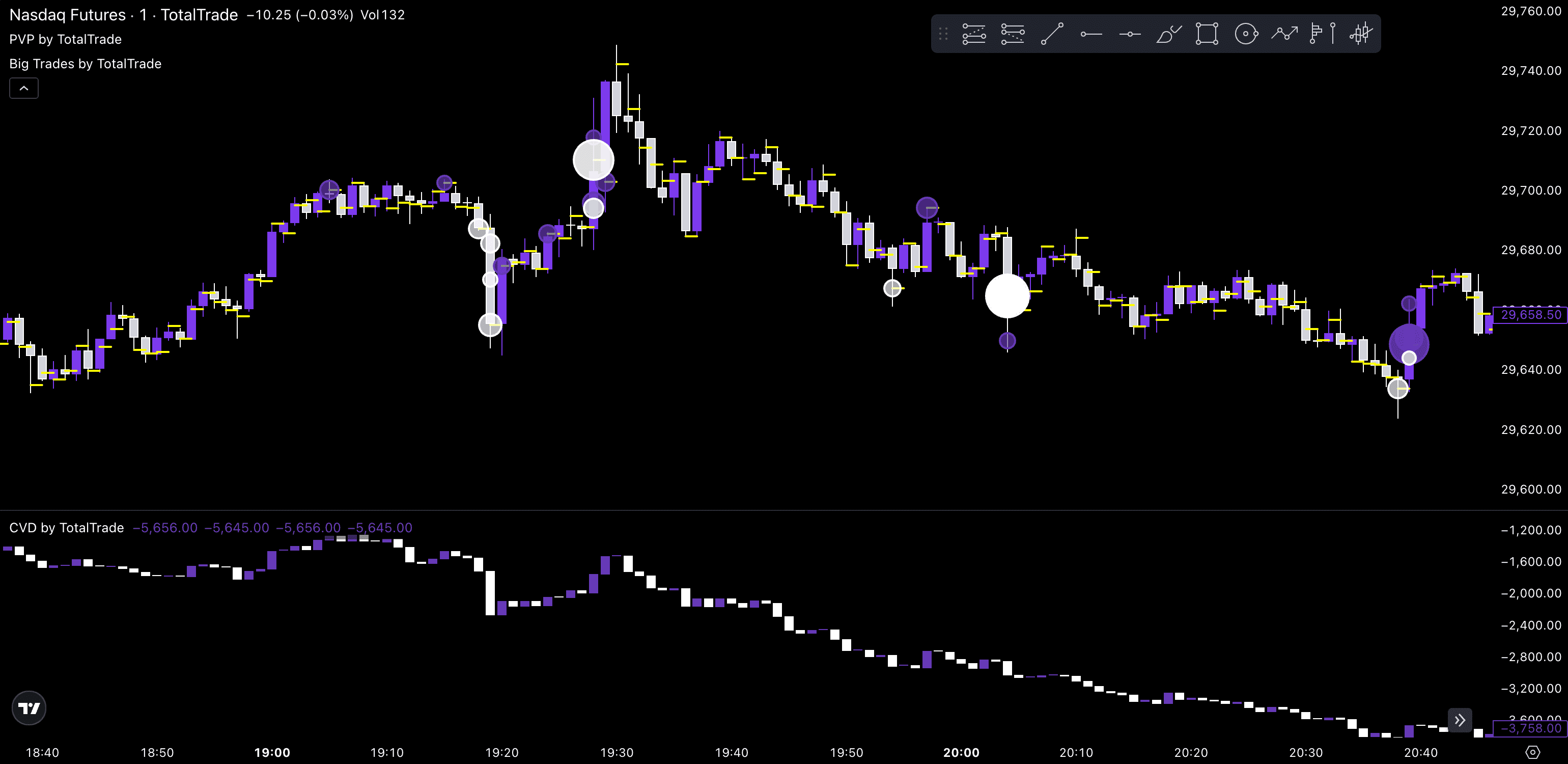
Note that one large buy can show up in Big Trades, lift the CVD and add volume to the profile. Seeing it in all three isn't three independent confirmations; it's one event read three ways.
Absorption vs. continuation
Near resistance, rising aggressive buying can lead to two outcomes:
- Continuation. Price clears the level and subsequent trades keep printing higher. Activity supports the breakout.
- Absorption. Price stalls near the high. The aggression is there, but it meets sell-side liquidity large enough to take it.
Absorption doesn't guarantee a reversal: passive liquidity may keep capping price or run out on the next attempt. What matters is how the zone evolves and what structure forms next. Near support the mirror image applies: aggressive selling that can't make new lows may point to passive buyers.
Avoid assigning an identity or intent to trades that the chart doesn't show. You see quantities traded, not who traded them or why.
Studying order flow in replay
In the TotalTrade indicator catalog, CVD By TotalTrade, Big Trade by TotalTrade and PVP by TotalTrade are built for futures and available on the Ultra plan. In the Backtester you place them alongside price and follow them during replay:
- pick a zone you already use in your trading;
- slow the replay as price approaches it;
- watch the trades as they happen, without knowing the outcome;
- record in notes and screenshots what drove your decision.
The same activity can mean different things during a breakout, a pullback or a range. Replay lets you see those differences before you know the result.
A word on data: futures volume counts contracts traded, while tick volume from a forex feed counts price updates. Don't carry the same volume reading from one market to another automatically.
FAQ
Does order flow work on spot forex?
Spot forex has no centralized book or consolidated volume; traders usually rely on tick volume, which measures something else. Order flow in the strict sense applies mainly to futures.
Do I need a DOM for order flow trading?
The DOM shows resting orders; delta, CVD, Big Trades and Volume Profile show executed trades. They're complementary, and you can learn a lot about order flow from executions alone.
Where should I start?
With delta and CVD on a few levels you already know well. Adding every tool at once makes it harder to tell which piece of information drove your decision.
For information and education only, not financial advice. Leveraged trading carries a high risk of loss.